


Recommended combination

Product description
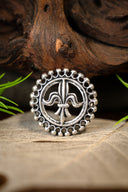
The model for this medieval brooch was a pilgrim's sign from England, dating from the late 15th century AD. The original is now in the possession of the Metropolitan Museum of Art. The original Fleur de Lys brooch comes from the English pilgrimage site of Walsingham, where England's most important shrine to the Virgin Mary was located. The circular decoration is typical of medieval halos at Walsingham and was often employed for precious metal brooches from the second quarter of the 15th century. The medieval brooch has a diameter of 2.7 cm, corresponding exactly to the historical model. A sturdy pin on the back permits the shirt neckline of the medieval garment to be closed. The Fleur-de-Lys brooch is crafted from high-quality bronze.
The lily has been the royal symbol since the time of the Merovingian king Clovis I, who is said to have been presented with a lily by an angel who descended to earth. Hence, throughout the Middle Ages, the lily adorned the coat of arms of French kings as the Fleur de Lys, the flower of light. The lily was also a symbol of purity and innocence amongst the people of the Middle Ages. The Fleur de Lys was considered the flower of light and was a symbol of the Blessed Virgin Mary. Through the tripartite division of the lily blossom, the Fleur de Lys stood for the holy trinity of Father, Son and Holy Spirit within the Christian context.
Product details
Product details:
Material: silvered bronze
Diameter: 2.7 cm
Based on a historic original
Shipment weight (grams): 50


