


Recommended combination

Product description
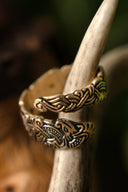
The Viking ring is based on the 10th–11th century Thorleif stone cross. The Vikings adopted the tradition of standing stones from the Celts of the Irish Sea region. The ring is available in sizes S, M, and L.
Dragons were the mythical counterparts of serpents and have formed part of humanity's earliest myths. As humans migrated, so too did dragon mythology, spreading across the world. Amongst many Indo-European peoples, dragons play a prominent role in their mythologies. In Germanic and later Viking mythology, dragons are regarded as all-devouring monsters. At the same time, they symbolise the evil beast that must be defeated by a hero. These two archetypes—the destroyer and the hero's adversary—reinforce one another.
In Germanic mythology, rings held sacred meaning. They symbolised an oath-bound connection between the wearer and their ruler, tribe, or deity. Torques and arm rings were not only common amongst the Germanic peoples, but also amongst the Scythians, Celts, and other Indo-European cultures. Indo-European society was deeply oath-based, structured around the concept of cosmic order. This order was maintained by the gods and supported by a social hierarchy in which oaths and symbolic jewellery such as torques affirmed social bonds and status.
Product details
Product details:
Material: bronze
Size: S t/m L (S: 17.3 mm ring size 52-58; M: 19.3 mm ring size 59-64; L: 21.3 mm ring size 65-70)
Based on a historic original
Shipping weight (grams): 10


