


Recommended combination


Product description
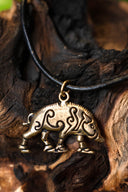
The beautiful pendant is based on an engraved Pictish stone from Knocknagael. Germanic and Celtic tribes were deeply fond of wild boars. The tribes of the "eburones" and "eburovici" even have the Germanic word for boar within their name. Ebur is Old High German and means the boar. Personal names such as Ebbo, Eberhard, Ebroin, Eburgrim, Eburhelm, Eburroc, Eofor, Everhelm, and Everman carry the meaning of boar amongst their roots. The legendary Irish fighter Conan has been compared to a boar, and the Danish king Harald's curious nickname "fighting tooth" may refer to the tusks of a wild boar. Pigs were, moreover, the principal domesticated animals of the Celts and, according to some Celtic legends on the island, are said to have come from the Other World. Particularly popular as grave goods for survival, they may also be found as standard symbols and the weapon of warriors — for example on Gundestrup's cauldron — and as decoration on torcs ("neck rings").
Product details
Product details:
Material: bronze
Size: 3 x 2.2 cm
Delivery without chain
Shipment weight (grams): 100


