


Recommended combination


Product description
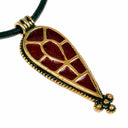
This drop-shaped pendant is based on a find from the Black Sea area during the migration period. The historical original, of Hunnic or Gothic origin, comes from Crimea and dates from the 4th-5th centuries; it was gold with glass- and garnet inlay and is now in the British Museum in London.
Where the original contained real almandine cloisonné, this pendant is made with red glass enamel. The cloisonné technique involved placing small shards of glass or gemstones in a grid of metal ridges; the technique spread from India through the Near East to Egypt, reaching Europe in the pre-Roman Iron Age. During the migration period, cloisonné spread further west, until the technique gave way to enamel work in Germanic areas from the 7th century onwards and ultimately only survived in Scandinavia and Byzantium.
A refined pendant for those who want to depict the time of the migration of people.
Product details
Product details
Material: bronze
Dimensions: 4 x 1.4 cm


