


Product description
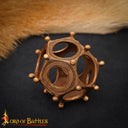
A Roman dodecahedron, also known as a Gallo-Roman dodecahedron, is a small, hollow object crafted from copper alloy, cast in the shape of a regular dodecahedron with twelve pentagonal faces. Each face has a circular opening of varying diameter at the centre, connected to the hollow interior. In addition, there is a small protruding knob at each corner.
These mysterious objects date from the 2nd to the 4th century AD. They rarely show wear and do not contain any carved numbers or letters. The purpose of the Roman dodecahedrons is a much-debated mystery, with over fifty theories proposed. There are no historical texts or images that explain their use.
Possible features that have been suggested:
- A measuring instrument employed to determine distances or object sizes, although there are no scales.
- A knitting aid for making gloves, though this does not fit the material and similar icosahedrons lack holes.
- A toy or child's game.
- A tool to check coins, as some dodecahedrons have been found in coin hoards.
- A religious object or divination instrument, particularly as they have often been found at Gallo-Roman sites.
- A test object for metalworkers to demonstrate their skills or gain status within a guild.
- A weapon, such as a club head or projectile, though they are too light to be effective.
Its exact function remains uncertain, and it remains a fascinating archaeological mystery.
The dodecahedron is a replica of several originals.


