


Product description
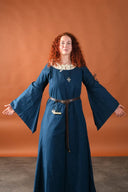
The dress is based on 12th–13th century originals with trumpet sleeves, as depicted in illuminated manuscripts, murals and panels from that era. Trumpet sleeves symbolised the higher, wealthier classes. As well-to-do ladies were not required to undertake any physical labour, they could wear dresses with 'impractical' sleeves. Dresses of this kind were often worn as a shift, whilst a surcotte in a rich colour was worn over it. The shape of the shift lent the whole outfit additional form. From the fifteenth century onwards, ladies also wore a dress with trumpet sleeves beneath the cotehardie. This elegant, loose-fitting dress is crafted from light cotton. The dress features historical gores (triangular pieces of fabric) which permit the skirt to sit wider. The neckline is fairly wide so that it remains discreet beneath another garment. The sleeves are fitted with a lace so that the shape may be adjusted to one's own preference. The dress may be worn under a surcotte, cotehardie or bliaut, and is particularly well-suited to being combined with a belt for the best fit.


