


| Size | Chest circumference | Arm Length | Back Length |
|---|---|---|---|
| S | 105 | 62 | 145 |
| M | 113 | 64 | 145 |
| L | 121 | 66 | 145 |
| XL | 129 | 66 | 145 |
| XXL | 137 | 66 | 145 |
| XXXL | 145 | 66 | 145 |
Product description
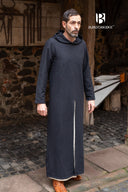
Men of the lower classes during the High and Late Middle Ages (1000–1500 AD) wore a tunicella—an 'over-tunic' with a built-in hood—for field work during the cold months or whilst travelling. The tunicella is particularly well-suited to portraying medieval travellers, featuring a split so the wearer can walk, run and ride on horseback. It protects the legs from cold weather and is fitted with a hood to guard against rain and wind. This tunic has also been designed for use as a monk's or hermit's habit.
The tunic is crafted from cloth in a colour traditionally worn by the poorer classes of society. The colours red, blue, purple and their variants were reserved exclusively for the nobility, as the pigments required to produce them were exceedingly expensive.
Product details
Product details:
Material: Devon Rough 100% cotton;
Colour: black;
Size: S t/m XXXL (see size chart below);
Shipping weight: 2 kg;
Washing instructions: hand wash or hand wash mode washing machine;
Based on historical original


