


Product description
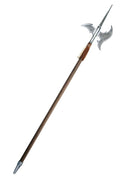
During the 16th century, halberds became increasingly ornate. The halberd features engravings. By the late 16th century, these weapons were carried mainly by non-commissioned officers as a special addition to the pike block. Halberds continued to hold a ceremonial role in European armies into the 17th century.
The halberd has a long point, permitting it to be employed as a pike. The claw-shaped hook on the back of the weapon was designed to pull cavalrymen from their horses. The tassels on this halberd originally served to channel blood away from the shaft, ensuring a secure grip even in the heat of battle. By the 16th century, they also served a decorative purpose.
The wavy shape of the axe blade is primarily decorative, but it could also be utilised to parry enemy weapons or function as a hook. This form developed as the guisarme (another polearm) and the halberd increasingly evolved towards each other during the 16th century.
When this weapon reproduction is ordered with a wooden shaft, it is dispatched in parts with a wooden shaft of approximately 198 cm (78 inches). The parts will need to be assembled by the customer. All components, including rivets, are included. All necessary pins to connect the parts, including the metal strips along the shaft and the leather tassels, are supplied.


