
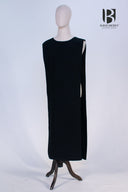

| Size | Chest width | Back Length |
|---|---|---|
| S/M | 35 | 125 |
| L/XL | 39 | 135 |
| 2XL/3XL | 43 | 145 |
Product description
During the High and Late Middle Ages, monks from monastic orders wore a tabard over their tunic. The tabard was fastened with a belt, serving as a humble piece of clothing amongst the low classes in society, such as farmers and foot soldiers. The tabard was worn to protect the tunic and other garments beneath it from dirt during work.
From the twelfth century onwards, knights wore surcoats over their plate armour. According to historians, the wearing of a white surcoat originated in the era of the Crusaders, as it reflected heat away from the plate armour. In later periods, other colours were also adopted. From the thirteenth century, the heraldry of the knight was depicted on the garment, so that it could be recognised on the battlefield.
The tabard is well-suited to use as the simple piece of clothing associated with monks, farmers, and foot soldiers, or as a surcoat worn over plate armour. It may also be decorated with your own heraldry, or customised with a cross from a knight order.
Product details
Product details:
Material: Devon Rough 100% cotton;
Colour: black;
Size: S/M, L/XL, XXL/XXXL;
Shipment weight: 1 kg;
Washing instructions: hand wash or hand wash cycle machine;
Based on historical original


