


Recommended combination


Product description
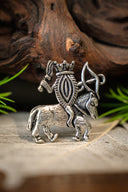
The extraordinary medieval badge is based on a historical model from the late Middle Ages, discovered in the Netherlands and dating back to 1375–1425 AD. So-called obscene-erotic badges were widespread in Northern Europe during this period, particularly in Belgium and the Netherlands, and were often associated with carnival festivities, serving as humorous and provocative accessories. The design features a crowned vulva riding a horse, holding a flagellum in one hand and a crossbow in the other, parodying the Virgin Mary.
Crafted from high-quality bronze, the badge includes an eye on the back for versatile wear, whether around the neck, attached to clothing, or secured to a robe. Measuring 3.1 x 2.1 cm, it matches the dimensions of the historical original. Its playful design permitted wearers to employ it both as a bold statement piece and as a conversation starter, particularly during the vibrant and indulgent carnival season.
Obscene-erotic pilgrimage badges such as this one represent a distinct category of medieval profane art. They often depicted personified genitalia — amongst them a vulva riding a horse, a winged vulva, or scenes involving phalli. These designs were likely intended to diffuse the taboo of sexuality through humour, and served as joking love tokens or playful tools for sparking conversation, particularly in contexts that encouraged social and sexual openness, such as carnivals.
Product details
Product details:
Material: silvered bronze
Dimensions: 3.1 x 2.1 cm
Based on a historic original
Shipment weight (grams): 100


