


Product description
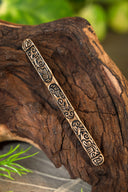
The jewellery divider is a replica of a 9th-century original found in Grabung, Latvia. Nearly identical jewellery dividers have been discovered in Gotland and a few in Väte. Jewellery dividers were employed to permit the wearer to carry more adornments. Jewellery symbolised wealth—the more jewellery one wore, the wealthier one appeared.
The jewellery divider is crafted from bronze and measures 5.5 x 5.5 cm.
The richly decorated women's costumes of the Viking Age typically featured elaborate oval or animal-head-shaped tortoise brooches, whose designs varied depending on the time period and region. These brooches, worn in pairs, were often connected by chains crafted from bronze or coloured glass beads.
Particularly impressive were the multiple rows of different chains adorned with decorative elements. These jewellery dividers were attached to the tortoise brooches, permitting several strands of necklaces and ornaments to be worn layered beneath them.
Viking necklaces were crafted from a variety of materials and served not only as adornment but also as status symbols and spiritual objects. They often contained unique elements and were closely tied to magic, rituals, and identity, as seen in stories about the Brísingamen necklace and saints such as Genevieve and Bathild. Archaeological finds show that necklaces could bear both pagan and Christian symbolism and were frequently associated with ritual specialists, such as the v?lur, who may have utilised them in seiðr magic. Research into necklace assemblages and graves containing magical artefacts suggests that necklaces played a significant role in the spiritual and ritual practices of Viking culture. Viking necklaces were thus more than mere decoration—they were deeply connected to social status, magic, and identity.


