


Product description
In ancient Rome, footwear was not only functional but also a symbol of status. Skilled shoemakers were held in high regard and crafted bespoke shoes for clients from the upper classes. Ordinary citizens, on the other hand, often made their own sandals, such as the simple sandalia or soleae, consisting of a sole with a strap between the toes. Soldiers wore sturdy military boots called caligae. For everyday use, there were leather shoes such as the calceus, suitable for both indoor and outdoor wear, and the crepida, which had a hard sole and side lacing.
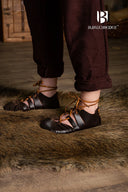
The carbatina (plural: carbatinae) is the Latin name for a type of shoe with a collar, crafted from a single piece of leather. Carbatinae were widespread throughout the Roman Empire and remained in use well into the first millennium AD. They were typically constructed from one piece of cowhide that formed both the sole and the upper, without any stitched-on parts such as outer soles. These shoes were mainly worn by farmers and poorer citizens. These sandals are well-suited to Roman, Greek, Late Roman, or (early) medieval reenactment.


