

| Chest circumference | Length | |
|---|---|---|
| S | 78-86 | 137,5 |
| M | 86-94 | 143 |
| L | 94-102 | 147 |
| XL | 102-110 | 149 |
| XXL | 110-118 | 152,5 |


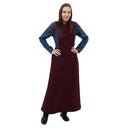


The surcotte, originally worn as an overgarment by men, became more popular among women from the thirteenth century. The garment is intended to be worn over another garment. Wide sleeveless surcottes were worn by the working class, while narrow surcottes were worn by the aristocracy. Narrow surcottes like these emerged in the 14th century and were a sometimes controversial garment.
This type of surcotte emerged during a period of sexual liberalization. The armholes of the surcotte became increasingly larger, this was a popular fashion statement. Eventually the holes reached the hips, like on this surcotte, and you could see the slip underneath. Therefore, this fad was criticized by some moralists. The medieval church did not consider this fashion chaste, and called the armholes 'the gates of hell'. Nevertheless, the narrow surcotte continued to be worn well into the 15th century and was even a formal dress from 1525 onwards.
This version is made from 100% wool: warm, sturdy and durable, ideal for outdoor events, cooler climates and evening gatherings. The wide side openings make it easy to combine layers and provide a beautiful contrast with the dress or tunic underneath.


