


Recommended combination

Product description
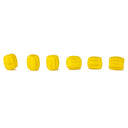
These glass beads are replicas of beads found during excavations in Birka on Björkö, Uppland, Sweden. The bead was found as part of a necklace with other glass beads and glass beads with silver foil. The original dates back to the Viking Age. This type of bead with ridges is also known as a melon bead. Birka and Hovgården, located on the islands of Björkö and Adelsö in Lake Mälaren, have been UNESCO World Heritage sites since 1993. Birka was an important Viking trading hub from the 8th to the 10th century, where goods such as Arabic silver and pearls were traded. The city was Sweden's first real city and had a strong hierarchy. Despite attempts to spread Christianity, it remained a pagan city. In the 10th century, Birka was abandoned, possibly due to land uplift and the rise of Sigtuna. The remains of Birka and the royal court on Adelsö are now on display at the Birka Viking Town Museum.
These glass beads are handmade employing the same technique the Vikings used: melting glass onto a metal rod to form beads. They are particularly well-suited to reenactment, living history, and Viking archaeology enthusiasts. With these beads, you can create your own Viking necklace. Mix & match them with other beads and pendants from our collection to craft a distinctive piece of jewellery.
Viking necklaces were crafted from various materials and served not only as decoration but also as a status symbol and spiritual object. They could contain unique elements and were closely connected to magic, rituals, and identity, as seen in stories about the Brísing necklace and saints such as Genevieve and Bathild. Archaeological finds show that necklaces could carry both pagan and Christian symbolism and were often associated with ritual specialists, amongst them the v?lur, who may have utilised them in seiðr magic. Research on necklace assemblages and graves with magical items suggests that necklaces played an important role in spiritual and ritual practices within Viking culture.
Product details
Product details:
Materials: glass
Colour: yellow
Findspot: Birka
Set of 3
Dimensions: approx. 1.3 x 1.1 cm
Hole diameter: 0.2 cm
Based on a historic original
Shipment weight (grams): 10


