


Recommended combination
Product description
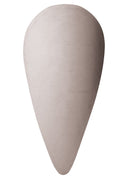
The shield is based on originals depicted on the Bayeux Tapestry (1066), the Codex Aureus Epternacensis (early 11th century), and the chronicle Liber ad honorem Augusti sive de rebus Siculis (1196). Shields of this type were probably introduced by the Normans and, following the First Crusade, were employed in all Christian, Byzantine, and some Islamic armies.
The shield offered excellent protection and was used by both cavalry and infantry. During long marches, shields were carried on the back, sometimes upside down. In the second half of the 12th century, the rounded top was gradually replaced by a flat one, although this type remained in use until the end of the 12th century.
Originally, the so-called kite shield was intended for mounted soldiers, yet it became popular amongst infantry as it could protect their forward leg. The kite-shaped shield is especially associated with the Normans, who are frequently depicted using it on the Bayeux Tapestry.
The shield is constructed from 10 mm thick wood and covered with linen. The linen is glued to the wood and painted white, permitting easy decoration with personal designs. On the back, it features a carrying strap, arm straps, and padding. The shield is 131 cm high, 56 cm wide, and weighs approximately 2.9 kg.
Product details
Product details:
Length: 131 cm
Width: 56 cm;
Material: Wood, linen;
Thickness: 1.2 cm;
Based on a historic original: Yes;
Shipping weight (grams): 7000


