


| Length | Neck width | Chest width | Sleeve width | Sleeve length | Weight | |
| S | 104 | 31 | 50 | 24 | 48 | 8.75 kg |
| M | 109 | 29 | 57 | 24 | 50 | 10.5 kg |
| L | 113 | 29 | 70 | 24 | 50 | 10.5 kg |
| XL | 115 | 30 | 75 | 26 | 50 | 12.5 kg |
| XXL | 120 | 35 | 90 | 26 | 70 | 17.5 kg |
| XXXL | 126 | 42 | 100 | 26 | 70 | 19.75 kg |


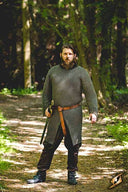


The hauberk of this type was widely employed in the Middle Ages. The split permits easier movement whilst riding a horse, and affords a little greater freedom of movement overall. The hauberk has long sleeves and is crafted from mild steel.
Chainmail shirts such as these were worn from the 11th century onwards. This type of long chainmail shirt, also called a hauberk, features a split. The split provides extra comfort whilst riding a horse.
11th–12th century depictions show knights almost exclusively with a split in their hauberks. From the 12th to the 14th century, hauberks were worn both with and without splits.
Leather laces may be employed to attach chainmail coifs and armour parts to the chainmail shirt with ease. The sleeves may also be tightened around the arm and elbow with leather laces, resulting in less play and greater freedom of movement.


